
 Get Started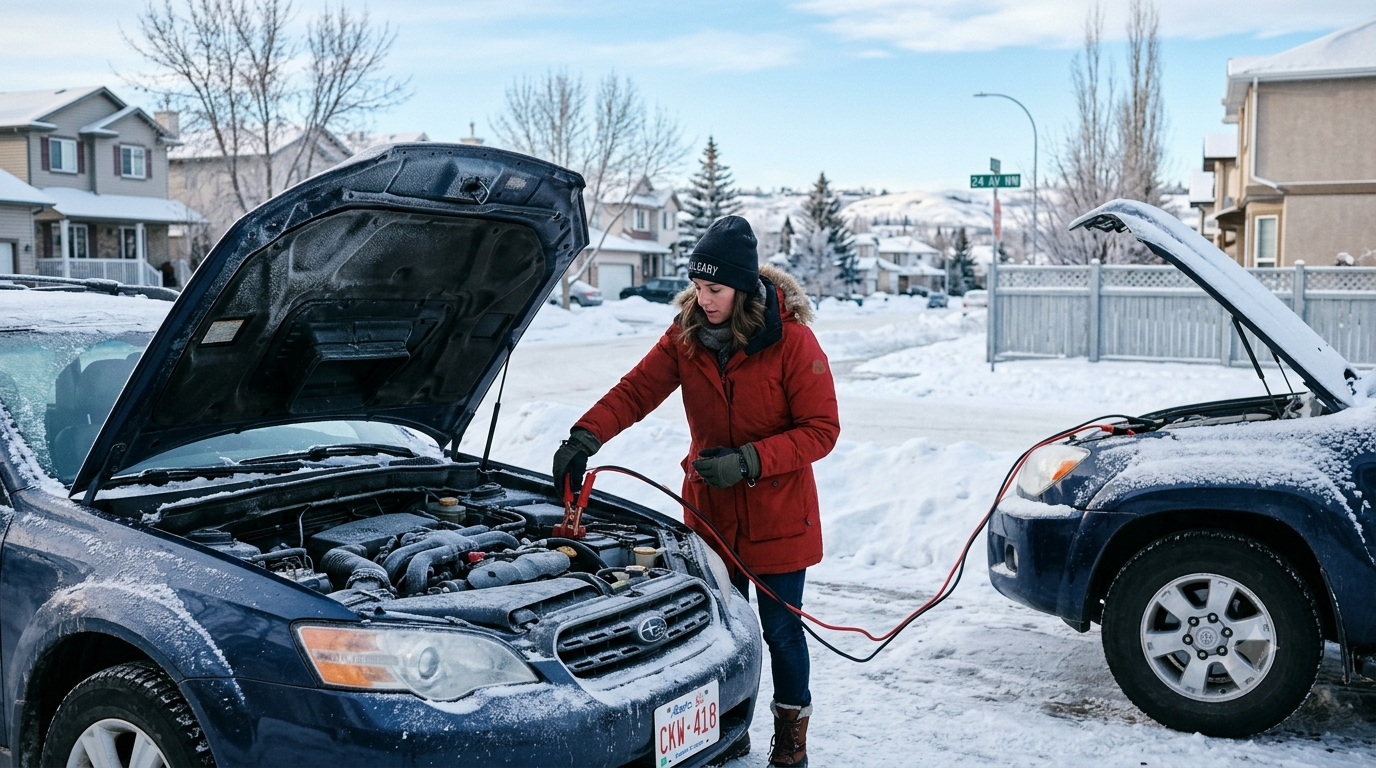
In other words, your cold Calgary weather experience will most likely enhance this story: Yes, you can boost a car, and in fact, that is the answer to what happens when your battery has become too weak to make the engine start. Calgary winters can be particularly tough on vehicle batteries, as frigid temperatures drain battery power while also creating a more difficult engine crank.
A car that starts reliably when the weather is warmer might inexplicably hesitate to start or not start at all on a cold morning. Knowing why this occurs, how to jumpstart a car safely, and when a boost is insufficient will get your wheels back on the right track again.
Q: Why Does Cold Weather Matter For Car Batteries?
One of the main nemeses of a car battery is cold; freezing temperatures can significantly limit its capacity to provide the necessary electrical current required by an engine to start.
Also, low temperatures thicken motor oil. This makes it harder for the starter motor to get the engine turned.
This creates a double challenge:
Less starting power available from the battery.
It takes more power for the engine to turn over.
Put that together with an old or partly discharged battery, and it can be just enough to keep the vehicle from starting.
This is why during the coldest periods in Calgary, we see a large number of breakdowns due to battery issues.
Can you boost a car from the dead when it is really cold?
In many situations, yes. The worse the conditions become, the more likely it is that a weak battery will be able to accept enough power and deliver enough power.
Take precautions by looking for any visible damage on the battery itself or around it before you try to boost the car.
Never attempt to boost a battery that is cracked, leaking, frozen, or shows visible damage. Professional evaluation of such a battery is advisable.
Severe cold could also impact the state of cables, terminals, and other elements that help in starting.
How to Safely Jump Start a Car In Calgary
As long as the battery and vehicle look safe enough to work with, the process is relatively straightforward: you connect an appropriate power source with correctly rated booster cables or a suitable jump starter.
Generally:
Park the helping car as close as you can; however, do not let the two automobiles touch each other.
Turn off both vehicles.
The positive and negative battery terminals are magnetic.
Follow your vehicle brand to connect all the cables.
If powering from another vehicle, start the assisting vehicle
Give a small SOA power so that the battery gets charged.
Try to start the car with a low battery.
If the cable is connected incorrectly, do not pull it out directly; please follow the correct order to disconnect.
Note: Always check your owner’s manual, as some vehicles have a specific boost terminal or steps.
What To Do When Your Car Will Not Start Even After A Boost
A boost rarely addresses the root of the problem.
If the engine still doesn’t turn on, it could be a couple of things.
The Battery Is Too Damaged
An older battery that has completed its service life will not accept a charge, even when jumped.
In this case, the car might start partway but won’t start again with it turned off.
The Battery Is Frozen
An extremely depleted battery might freeze in Arctic conditions. It can be dangerous to try to boost a damaged or frozen battery.
Leave it to professionals• If you think your battery may be frozen, get it checked instead of continuously trying to start the car.
The Alternator Is Not Charging
The alternator charges the battery when the engine is running.
Even if the battery is dead and you do manage to bump-start it, it will only run for a very short time because, when an alternator is on its way out, it won’t be charging the battery.
The Starter Has a Problem
Autobest If the battery has fully a good deal inside it although the starter electric motor is defective, increasing can be no greater.
Another Electrical Problem Exists
Repeated problems with starting are also caused by parasitic battery drain, corroded connections, damaged wiring, or another electrical fault.
Indicators Your Battery Might Be Due for Replacement
If the battery is getting close to its end of useful life, a boost can only be short-term!
Indications your battery could need servicing include:
Slow engine cranking
Repeated dead-battery incidents
Dim headlights
Electrical accessories behaving unusually
Battery warning light
Corrosion around terminals
An aged battery
Needing frequent boosts
If you have to jump-start your vehicle frequently, it’s a good idea to have them check your charging and starting system rather than look for free crash-course boost lessons.
Is there any way driving can recharge our Dead Battery?
Driving following a successful boost can give the alternator time to replenish the battery, but it doesn’t mean a badly depleted or defective cell will be restored 100%.
If the battery is old or has experienced deep electrical discharges, it needs a good charge or changing.
We may use the phrase “keep a top off,” but one short drive can still not do enough to save a battery in such a depleted state — especially in extreme winter conditions.
What To Do When Your Car Refuses to Start in Calgary
If your car does not start and you are stuck somewhere in Calgary, First of all, check if the problem is certainly the dead battery.
If you hear a fast clicking noise when turning the key or pushing the start button, a weak battery is one of the possibilities.
If you hear a click (or two) followed by silence, or if it cranks normally but doesn’t start, that’s not the battery.
Instead of trying to start the car over and over again, you should contact a roadside service professional.
A skilled technician will evaluate the battery and provide you with what is needed: a boost, a battery change, or other roadside assistance.
Portable Jump Starters Can Help
For instance, if you live here in Calgary like us, a portable jump starter is extremely handy during our long winters.
How a jump starter differs from regular booster cables is that it does not need another vehicle to supply the power.
Pick a unit that is right for your car and remember to charge it, though.
Portable batteries are also adversely affected by extreme cold, so placing the device in line with instructions from the manufacturer is critical.
How to Avoid a Dead Battery Through Calgary Winters
With a well-executed prevention strategy, this lessens the likelihood that you’ll need a boost on a cold morning.
Check Your Battery
If your battery is old or behaving weakly, be sure to have it tested before winter.
Keep Battery Connections Clean
Battery terminals experiencing corrosion can cause electrical connections to go out of order.
Limit Unnecessary Electrical Loads
Reduce electrical loads: When you start the vehicle, shut off accessories that are not required for driving, such as heated seats, lights, and entertainment systems, if it is safe to do so.
Consider an Engine Block Heater
An engine block heater will warm up the engine fluids and thereby help make cold starts easier depending on local conditions and vehicles.
Avoid Repeated Short Trips
The alternator might not have enough time between short trips to replace the energy required for starting.
When you park, if possible, try parking in a garage.
Having the garage will lessen the effect of severe overnight temperatures.
When Should You Call a Calgary Towing or Roadside Assistance?
However, if you are not confident you can safely jumpstart the vehicle, it is best to call for professional roadside assistance.
This is especially important when:
- You are stuck on a busy road
- Weather conditions are severe
- You are parked somewhere unsafe
- The battery appears damaged
- Still won’t start after a jump
- You lack the proper booster cables
- You do not have a clue on how to wire the cables
- The car needs special starting tools
Obtain the boop of a professional motor vehicle technician who will be able to look into the automobile and determine if it requires a boost.
Final Thoughts
So the answer is yes, you can jumpstart a car in cold Calgary weather, and often a boost will get the vehicle going again at temperatures so low to be wishful about anything but just an example of cold, and thus even if your battery is on its knees, buckling under freezing temperatures. But in extremely cold conditions, battery issues can be compounded, and a jumpstart isn’t necessarily a permanent fix.
Never try to jumpstart a battery that is damaged or frozen. If your vehicle continues to require boosts, have the battery, alternator, starter, and electrical system tested.
For Calgary drivers, preparing the battery before winter and making sure to keep appropriate emergency equipment in the vehicle can mean the difference between hassle and a happy ending on those days where temperatures dip. If you’re going to be stuck and, for whatever reason, it’s not safe to start, then that’s what roadside assistance is for; they can determine whether you need a battery boost, battery replacement, or towing services.